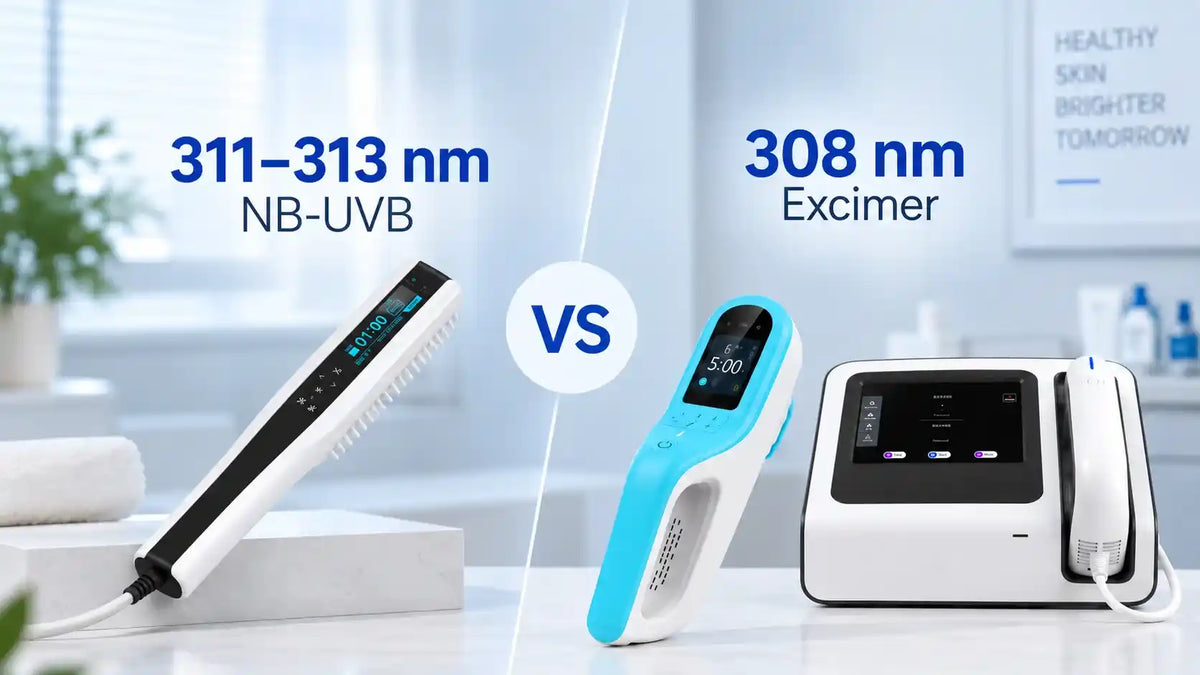
If you are comparing 311 nm narrowband UVB with 308 nm excimer light therapy, the three-nanometer difference is probably not the most useful place to start.
Both are forms of UVB phototherapy. Both are used in dermatology, including for conditions such as vitiligo and psoriasis. But the way the light is delivered can be quite different.
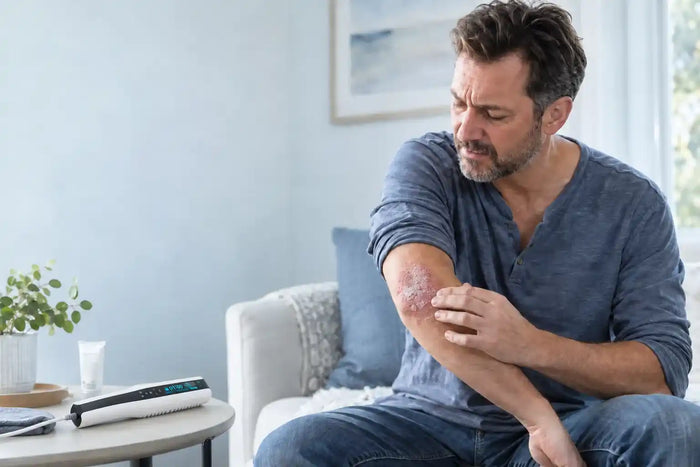
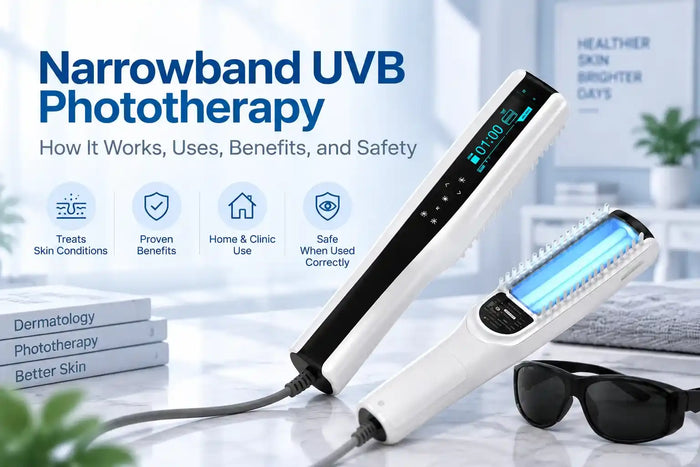
311–313 nm narrowband UVB (NB-UVB) can be delivered through several types of devices, from handheld units to larger panels and full-body systems. That makes it useful when treatment needs to cover more than one spot, or when the affected area is simply too large to treat patch by patch. A 308 nm excimer device is usually aimed at individual patches rather than larger areas. That can work well when there are only a few spots to treat.
The size and number of those patches often matter more than the wavelength number itself.
308 nm vs. 311 nm UVB at a Glance
| Comparison | 311–313 nm NB-UVB | 308 nm Excimer |
|---|---|---|
| Treatment style | Localized or broader-area treatment | Targeted treatment |
| Common device formats | Handheld unit, comb, panel, full-body cabinet | Excimer lamp or excimer laser |
| Typical coverage | One area, several areas, or larger regions | Individual patches |
| Nearby unaffected skin | May receive some UVB, depending on the device | Usually easier to limit |
| Scalp use | Comb-style devices can help move hair aside | Can target visible, accessible patches |
| Practical fit | Several patches or a larger treatment area | A few clearly defined patches |
That’s a useful starting point, not a hard rule. Someone with one small patch may still use 311 nm, while a person with several lesions may sometimes be treated with a targeted device. Where the patches are matters, and so does how the skin has responded in the past. The type of device can make a difference too.
The Main Difference Is How the Light Is Used
The numbers are close, but the treatment setup can be very different. In practice, they sit close together within the UVB spectrum.
The more noticeable difference for the person receiving treatment is often how much skin is exposed at one time.
NB-UVB around 311–313 nm can be delivered through full-body cabinets, panels, handheld units and comb-style devices. That gives it quite a wide range of possible treatment areas.
A handheld unit may be used on a few areas. A comb can help expose skin underneath hair. Larger systems can cover considerably more skin at once.
308 nm excimer light takes a more targeted approach. It directs UVB onto selected treatment areas rather than illuminating a much larger surrounding region. DermNet lists 308 nm excimer therapy as a targeted option for conditions such as localized psoriasis and vitiligo.
So rather than asking:
“Is 308 nm better than 311 nm?”
a more useful question is:
“How much skin actually needs treatment?”
A few small, clearly defined patches
Targeted 308 nm treatment may make practical sense because the treatment window can be positioned over individual lesions while limiting unnecessary exposure of nearby unaffected skin.
Several areas or a larger treatment region
311 nm NB-UVB may become more practical because devices are available with larger treatment fields.
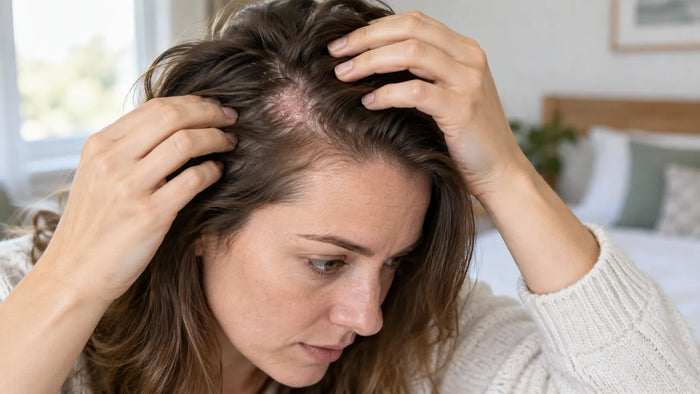
Scalp treatment
The wavelength is only part of the problem. Hair can physically block UVB from reaching the skin.
That is why comb-style NB-UVB devices exist: the comb helps move hair aside while bringing the light source closer to the scalp.
| Affected area | Size and distribution | Severity or skin status | Practical direction |
|---|---|---|---|
| Scalp under hair | Small or larger plaques | Mild to moderate | Comb-style NB-UVB can help part the hair so the light reaches the scalp |
| One easy-to-reach area | One or two small, clearly defined patches | Mild and stable | Targeted 308 nm or localized 311 nm may be practical |
| Hands, feet, elbows or knees | A few small, separate patches | Mild to moderate | A targeted handheld device may be easier to position |
| Several body areas | Multiple patches or a broader treatment region | Moderate or recurring | Wider-field NB-UVB may reduce repeated repositioning |
| Large or widespread areas | Extensive coverage | Severe, inflamed or changing quickly | Seek clinician guidance before choosing a home device |
*Use this table as a starting point only. Diagnosis, skin type, treatment history, irradiance and prescribed dose also affect device choice.
What About Vitiligo?
Vitiligo is where this comparison comes up most often. Both 308 nm and 311 nm phototherapy have been studied, and the results have not always pointed in the same direction.
A 2007 multicenter study comparing 308 nm monochromatic excimer light with 311–313 nm NB-UVB found faster and stronger repigmentation in the 308 nm group in that particular treatment protocol.
A later randomized controlled study reached a different result. After 24 treatment sessions, localized 311 nm NB-UVB produced better results than 308 nm monochromatic excimer light in that study.
In a 2021 study, the patches treated with 308 nm began to regain pigment sooner than those treated with targeted 311 nm NB-UVB. The researchers compared matching vitiligo patches on the same patients.
That may sound contradictory, but it highlights an important point:
Wavelength alone does not determine the outcome.
Device type, treatment protocol, dose, treatment frequency, body location and the characteristics of the lesions can all affect the result.
Body location matters as well. Earlier research on 308 nm excimer treatment found different responses at different anatomical sites, with areas such as the hands and feet responding differently from some other locations.
For someone comparing devices for vitiligo, it therefore makes more sense to consider where the patches are, how many there are and how much total skin needs treatment rather than choosing solely on the basis of 308 versus 311.
| Study | Comparison | Main finding |
|---|---|---|
| 2007 | 308 nm excimer light vs. 311–313 nm NB-UVB | Faster and stronger repigmentation with 308 nm under that protocol |
| 2011 | 308 nm excimer light vs. localized 311 nm NB-UVB | Better results with localized 311 nm after 24 sessions |
| 2021 | 308 nm excimer light vs. targeted 311 nm NB-UVB | Repigmentation began sooner in patches treated with 308 nm |
*The studies used different devices and treatment protocols, so the results should not be interpreted as proof that one wavelength is always better.
What About Psoriasis?
The same treatment-area logic can be useful when looking at psoriasis.
The American Academy of Dermatology includes both narrowband UVB and targeted UVB options—including excimer laser, excimer light and targeted narrowband UVB—among phototherapy approaches used for psoriasis.
NB-UVB can be used when psoriasis affects larger or multiple areas. Targeted treatment may be useful when the problem is limited to smaller, stubborn plaques.
The AAD also notes that excimer treatment can be used on areas such as the scalp, ears, armpits, groin, buttocks, elbows and knees.
So again, treatment coverage matters.
Someone with one or two stubborn plaques is dealing with a different practical problem from someone with psoriasis spread across the trunk, arms and legs.
308 nm Does Not Automatically Mean “Stronger”
This is one of the easiest things to misunderstand when comparing phototherapy devices.
308 nm and 311 nm describe wavelength. They do not tell you how powerful a device is.
To understand how UVB is actually delivered, three numbers are more useful:
Wavelength (nm) : The UV light itself.
Irradiance (mW/cm²) : The amount of power reaching the skin.
Dose (mJ/cm² or J/cm²) : The total UV energy delivered over the course of a treatment.
In simplified form:
Dose = Irradiance × Exposure Time
That means two devices operating at similar wavelengths can still deliver treatment very differently.
A device with higher irradiance can reach a given dose in less time, but that does not mean the appropriate treatment dose should simply be increased.
This distinction becomes especially important when comparing home phototherapy devices by specifications alone.
Treatment Area Can Matter More Than the Wavelength
Imagine two people considering UVB phototherapy.
One has two small, stable patches that are easy to see and reach.
The other has patches spread across several parts of the body.
Even if both are candidates for UVB phototherapy, the practical requirements are quite different.
With a small treatment window, treating two patches may be straightforward. But treating ten or fifteen separate areas means repositioning the device repeatedly.
A larger NB-UVB treatment area may cover more skin in each exposure. The trade-off is that more surrounding skin may also receive UVB.
That is why comparing devices only by wavelength misses a large part of the decision.
Before choosing a device, it helps to map out:
- how many areas need treatment;
- how large each area is;
- whether the areas are easy to reach;
- whether hair blocks the treatment site;
- whether treatment needs to stay tightly confined to the affected skin.
Home vs. Clinic Treatment
Both 311 nm NB-UVB and targeted UVB treatments can be encountered in clinical settings, while home phototherapy is also available for selected patients and conditions.
The important distinction is not simply where the device sits.
Phototherapy still requires a dosing plan.
Skin response after treatment matters. Persistent redness, burning, blistering or excessive irritation can indicate that the exposure needs to be reviewed before another session.
This is particularly important when treatment moves from a supervised clinic environment into the home.
A home device may reduce travel and make repeated sessions easier to fit into daily life, but convenience should not be confused with unrestricted UV exposure.
If home treatment is what you are considering, read our Narrowband UVB Phototherapy guide.
So, How Do You Choose Between 308 nm and 311 nm?
There is no single answer based on wavelength alone.
A useful starting point is the treatment area.
If there are only one or two clearly defined patches, a targeted 308 nm device can be a practical fit because the light stays concentrated on those areas. When treatment needs to cover several spots, or a larger section of skin, a 311 nm NB-UVB device with a wider treatment field may be easier to use.
Scalp treatment has its own practical problem: hair blocks the light. So even if the wavelength is right, the device still needs a way to get close enough to the skin. Comb attachments can help by separating the hair and making it easier to treat the scalp more evenly.
And if you are comparing two actual devices, do not stop at wavelength. Look at the treatment window, irradiance, dose controls, timer, calibration information and how easily the device can be positioned over the areas you need to treat.
Phototherapy should be used according to an appropriate treatment plan, particularly when dose changes are involved.
FAQ
Is 308 nm the same as narrowband UVB?
308 nm excimer light is UVB and is used as a targeted phototherapy approach. Conventional NB-UVB is generally centered around approximately 311–313 nm. They are related forms of UVB phototherapy, but the equipment and treatment coverage can differ.
Is 308 nm better than 311 nm for vitiligo?
There isn’t one clear answer in the research. Some studies came out in favor of 308 nm, while another trial found better results with localized 311 nm NB-UVB. The setup matters a lot, including the device, treatment schedule, and where the patches are on the body.
Can 311 nm NB-UVB treat small areas?
Yes. NB-UVB is not limited to large cabinets. Localized and handheld NB-UVB devices can treat smaller areas as well. A small treatment area does not automatically mean that 308 nm is required.
Is 308 nm excimer light the same as an excimer laser?
Not necessarily. 308 nm doesn’t always mean the same type of machine. It may come from an excimer laser or an excimer lamp. One study in people with vitiligo found similar repigmentation with both, though the skin reacted a little differently when it came to redness.
Can I choose a phototherapy device based on wavelength alone?
Not really. Two devices can use a similar wavelength and still work very differently. Treatment area, output, dose controls, and the type of skin condition all matter when choosing a device.
Final Thoughts
The three-nanometer gap sounds important, but in practice, treatment area and device type usually matter more.
311–313 nm NB-UVB can work across a wide range of device formats, from localized handheld units and combs to much larger treatment systems. That flexibility can make it practical when several areas or a larger amount of skin needs treatment.
308 nm excimer light is built around targeted treatment. It can make sense when UVB needs to stay focused on individual patches.
The better fit often comes down to the patches themselves—where they are, how much skin they cover, and whether they need targeted treatment.