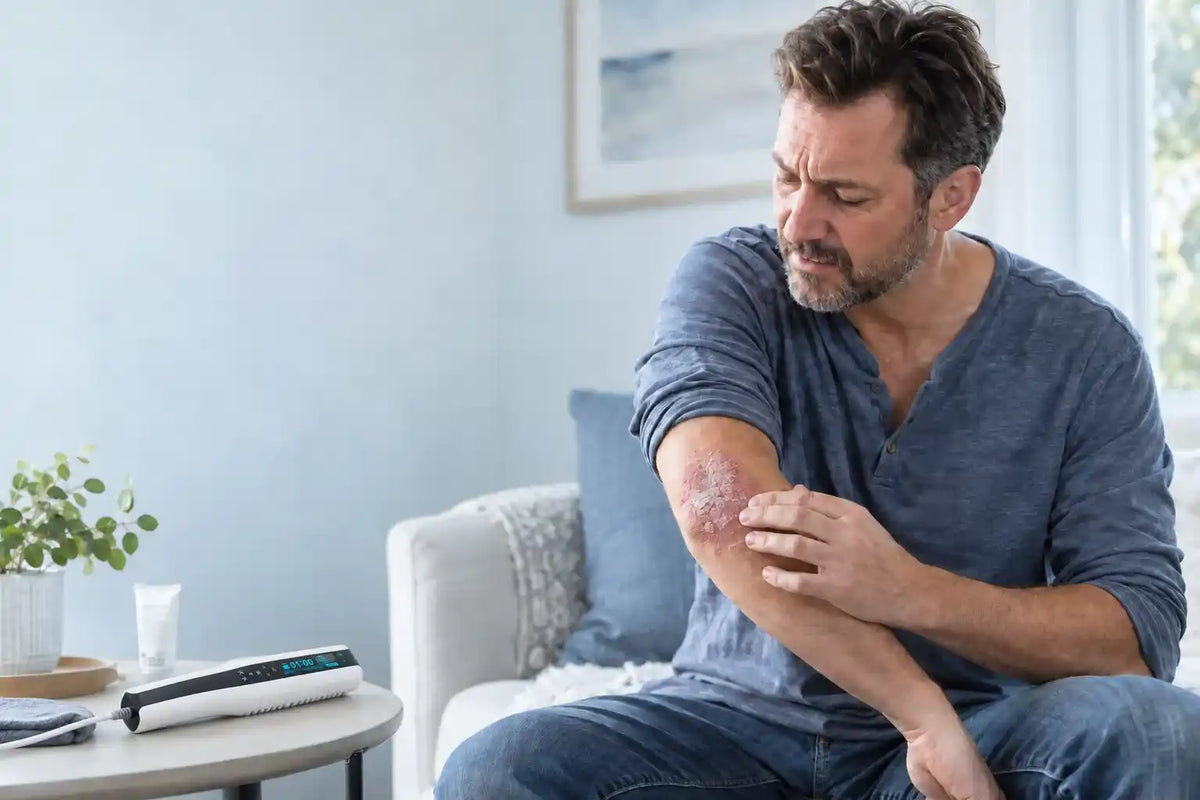
Applying cream to one patch of psoriasis is fairly simple. Reaching your back or treating patches can be harder. If creams aren’t helping enough your dermatologist may suggest light therapy.
Here’s what treatment involves how the main options. What to consider before choosing a home device.
What Is Light Therapy for Psoriasis?
Light therapy, also called phototherapy uses controlled light to treat the skin. UVB treatment slows skin cell buildup. Reduces inflammation. Plaques may become flatter shed scale and itch less. The American Academy of Dermatology explains how it works.
Treatment takes repeated sessions. It can help control psoriasis. It doesn’t cure it and patches may return after a course ends.
What Types of Light Therapy Are Available?
The names can sound technical. The main differences are straightforward.
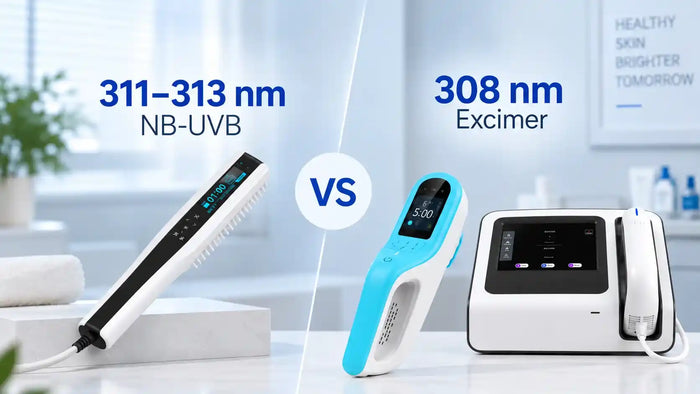
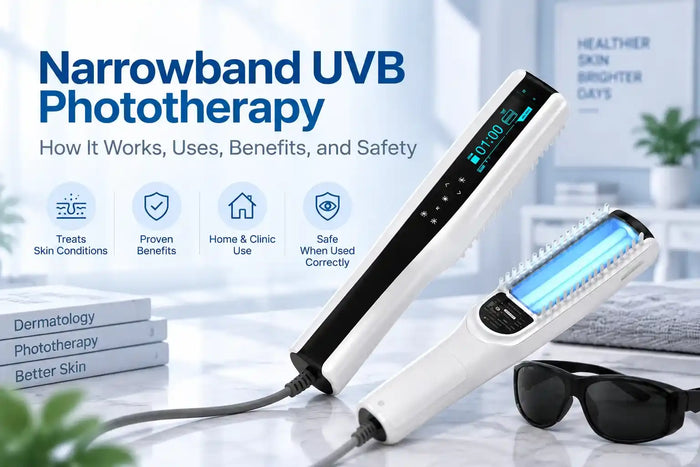
Narrowband UVB (311–313 nm)
Available in devices, larger panels and full-body cabinets. How skin it treats at once depends on the device.
Targeted 308 nm Excimer Treatment
Treats individual psoriasis patches while limiting UV exposure to the surrounding skin. Devices include excimer lasers and non-laser excimer lights.
PUVA (UVA + Psoralen)
Combines UVA light with a medicine called psoralen which makes skin more sensitive to light. This treatment needs precautions.
The National Psoriasis Foundation explains these options in detail.
A wavelength number doesn’t tell you how skin a device covers. Check the treatment window. How easily it reaches the areas you need to treat.
Matching the Equipment to Your Skin
A small device may be practical for one elbow. Using it across your back could mean a lot of repositioning.
- A small patches: A targeted device may make it easier to treat individual areas.
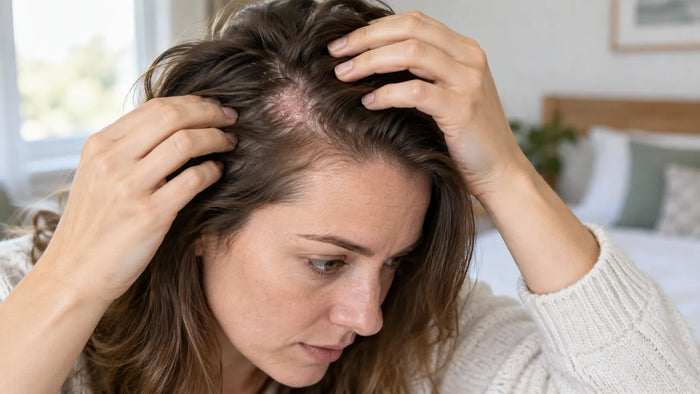
- Scalp psoriasis: Hair can block the light. Some devices have comb attachments to help expose the skin.
- Several separate patches: Allow time to position the device at each area.
- Widespread psoriasis: Ask whether a larger panel or cabinet would be more practical.
Show your clinician all the areas you want to treat including those you can’t easily reach. NYU Langone describes both body and targeted treatment.
What Happens During Treatment?
Before you start: Your clinician reviews your skin, medicines and sensitivity to sunlight then sets the starting dose.
During each session: You expose the treatment area wear the eye protection and cover other areas as instructed. For home treatment ask for a demonstration with your device.
Between sessions: Record your treatments and report skin reactions missed sessions or new medicines. Check before restarting after a break.
Many courses involve two or three sessions a week over weeks although your schedule may differ. The AAD’s patient guide describes what to expect.
Home vs Clinic Phototherapy

Home treatment saves the trip to the clinic. That can make regular sessions easier to fit around work or family life especially when the nearest treatment center is away.
A clinic offers hands-on help. Staff can position the equipment check your skin and manage dose changes. At home you need training, a prescribed schedule and access to follow-up advice.
The 2024 LITE trial found that home narrowband UVB met its criteria for being no meaningfully less effective than office treatment. Patients reported treatment burden although persistent redness occurred more often. These findings apply to the program and equipment studied—not every device sold online. Read the study.
Before choosing a home unit make sure you can reach the affected areas and follow the treatment plan comfortably.
What Changes Might You Notice?
You may see difference after the first few sessions. As treatment starts to help patches may feel less raised produce scale or itch less. Some areas respond sooner than others.
Take photos in similar lighting and from the same distance. They can make gradual changes easier to discuss at follow-up visits.
No fixed number of sessions guarantees skin. Your dermatologist will review progress. Decide whether to continue or adjust treatment. NYU Langone outlines how responses can vary.
Side Effects and Safety
Skin may feel dry, itchy or tender after treatment. If you develop painful redness, a burn, or blisters, pause treatment and contact your clinic before another session. Don’t add exposure because a patch is slow to improve.
Tell your clinician about medicines, sensitivity to sunlight and any history of skin cancer. Repeated UV exposure can age the skin; longer-term risks depend on the treatment and your exposure history. Cleveland Clinic explains these concerns.
Ask which skin products to use before treatment. Salicylic acid for example can reduce UVB effectiveness when applied beforehand. Follow your schedule and don’t substitute tanning beds for medical phototherapy. See the guidance from the AAD and National Psoriasis Foundation.
Frequently Asked Questions
Is UVB Light Therapy Effective for Psoriasis?
Yes, it can help reduce plaques and itching. The response varies, so your dermatologist will check your progress during the course. You may still need other treatment alongside it.
How Long Does Light Therapy Take to Work?
Expect a course of treatment over weeks, rather than a visible change after one visit. Ask when your clinician plans to review progress and what changes you should look for. There isn’t a fixed number of sessions that works for everyone.
Can UVB phototherapy be done at Home?
It can, when your clinician recommends it and provides a plan for a suitable device. You’ll need training, follow-up, and clear instructions about missed sessions or skin reactions.
Is 311 nm Narrowband UVB the Same as 308 nm Excimer Light?
They are different forms of UVB treatment. Excimer light is used for targeted treatment, while 311 nm equipment comes in formats ranging from small handheld units to larger systems. Coverage depends on the device design, so compare the actual treatment window and wavelength.
Can Psoriasis Return After Phototherapy?
Yes. Clearer skin doesn’t mean psoriasis is permanently gone. Before finishing a course, ask what to do if patches return and whether you should book a review before restarting treatment.
Before You Start
At your appointment, point out the patches you find hardest to manage. That might be the one you can’t reach, the one that keeps itching, or an area that never seems to settle with creams. Explain what you’ve tried and whether regular clinic visits are realistic for you. If you’re considering a home unit, bring the device details so your dermatologist can check whether it suits the areas you need to treat.